Designed an online platform for Court-Appointed Special Advocates (CASA), aimed at streamlining case management and reducing "friction in 'high-stakes' advocacy work." Through research-driven design decisions, this project supports stronger organization for documents, and better outcomes for children navigating the legal system.

Ideated concept development across multiple design decisions.
Created custom illustrations used throughout the interface
Designed the complete loading and autofill experience
Helped translate research insights into system-level design decisions
Challenge
Court-Appointed special advocates (CASA) operate in "high-stakes" environments with limited margin for error. Yet the systems supporting them often:
Withhold critical case information
Create unnecessary administrative burden
Obscure next steps and responsibilities
Fail to show how advocacy work actually happens
This means that when the systems are unclear, time is lost; and when time is lost, children are affected.
The main challenge:
"How might we design a platform that supports advocates working on behalf of children" (without adding unnecessary steps or additional cognitive load?
Results
The created platform communicates how CASA advocates move through a case from start to finish
Core workflows were simplified to reduce confusion and unnecessary steps
Design decisions reflect how advocates actually work in high-stakes, real-world situations
The final structure prioritizes clarity and trust, which help advocates focus on children rather than the system they work for.
In conclusion the work creates a stronger foundation for advocates to do their jobs confidently and effectively, which directly supports better outcomes for the children they represent.
75%
of participants experienced confusion during first-time use
80%
of usability issues were related to clarity & hierarchy
90%
of design changes were driven by research findings
Process
This project followed an "iterative, research-driven process" which was focused on understanding the advocate workflows, as well as identifying pain points, and designing solutions that reduce cognitive load in high-stakes situations.
First, we had to understand the problem
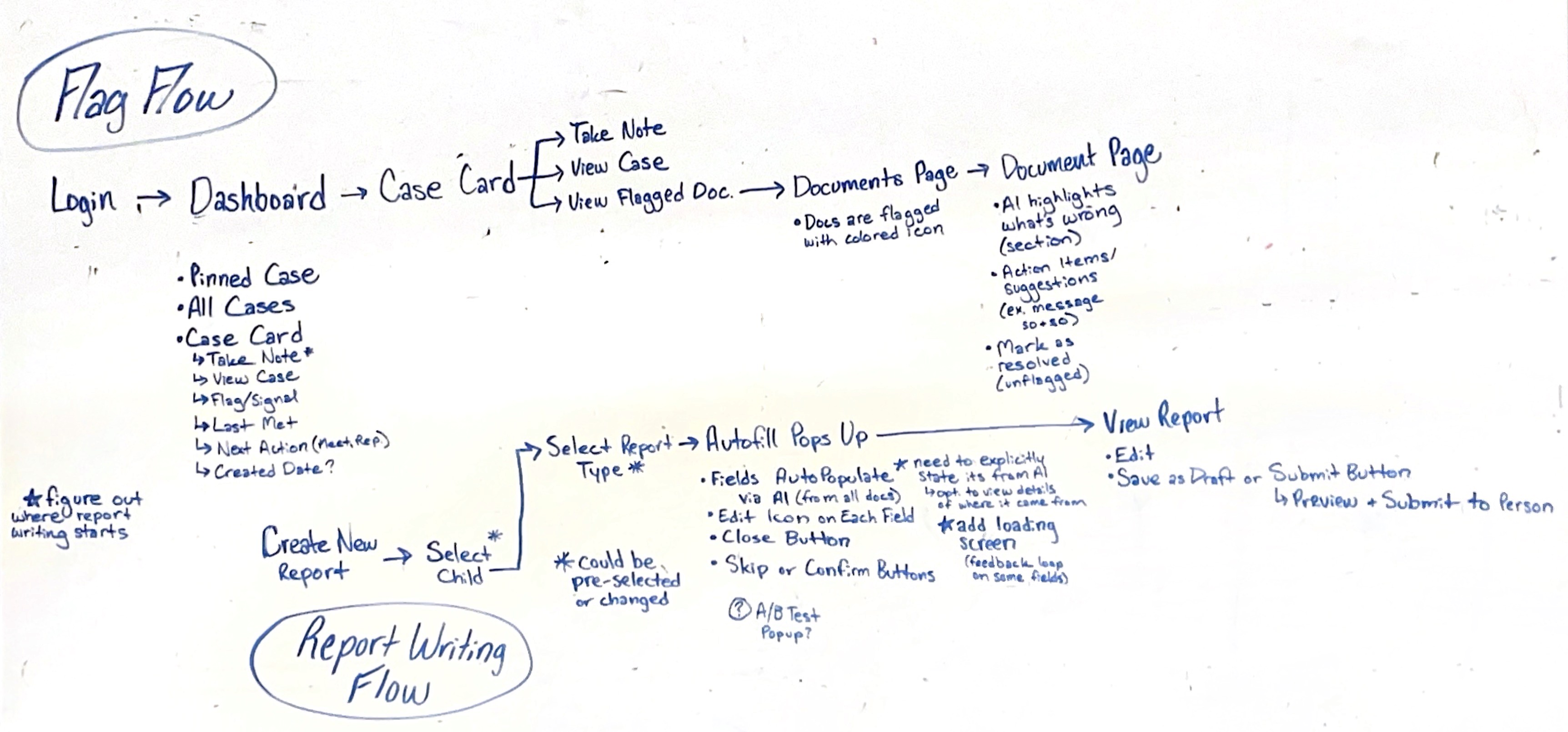
Mapped the existing report-writing flow to identify unnecessary steps and points of friction
Reviewed current screens to understand limitations around flexibility, discoverability, and document referencing
Grounded the work based on CASA volunteers operating under time and emotional pressure
Then we had to learn from the users
Conducted usability testing with CASA volunteers focused on reaching and using the report-writing screen
Observed where users slowed down, became confused, or annoyed.
Organized findings into clear problem areas related to autofill behavior, layout constraints, and feature visibility
Next, we explored & Iterated
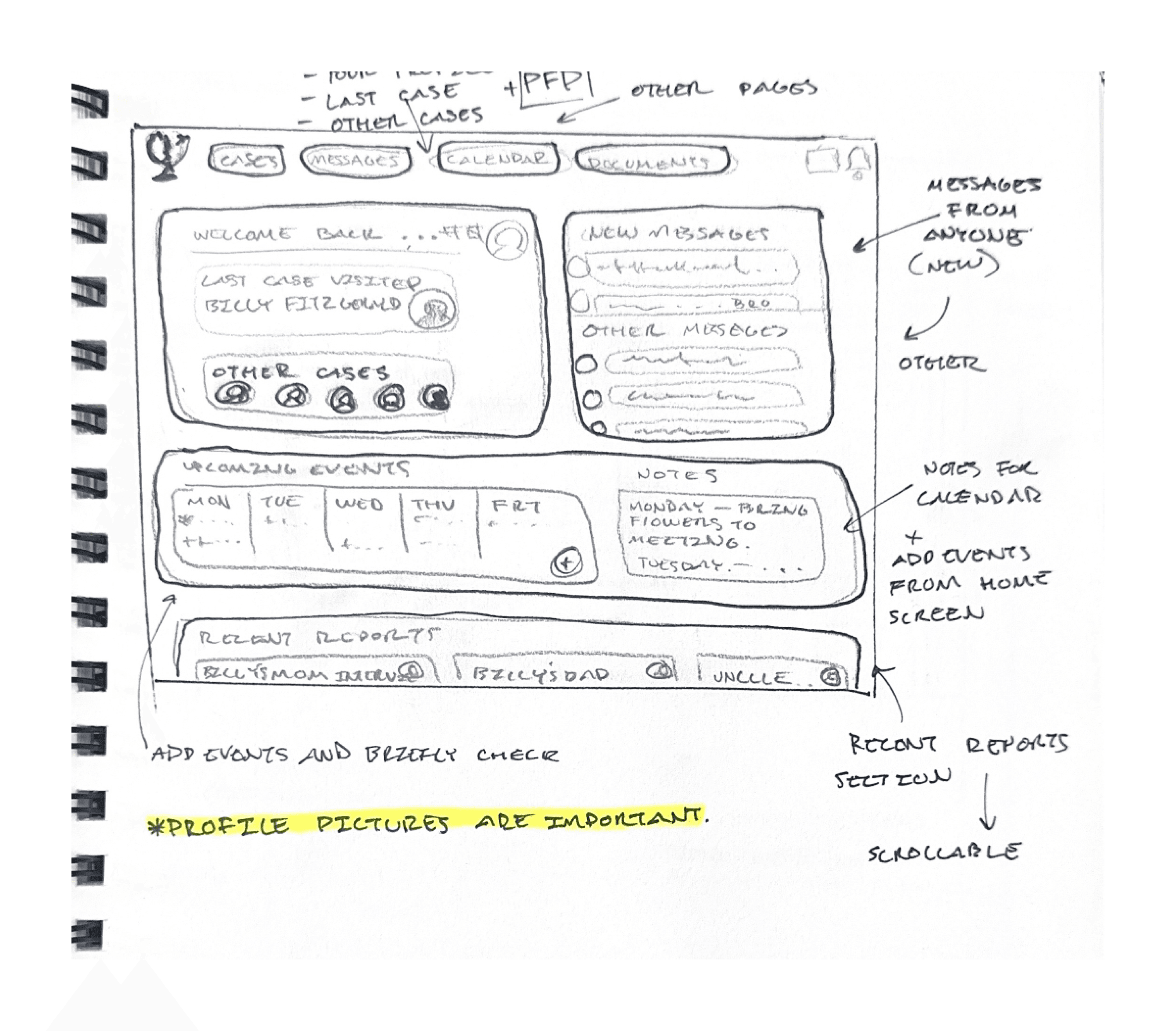
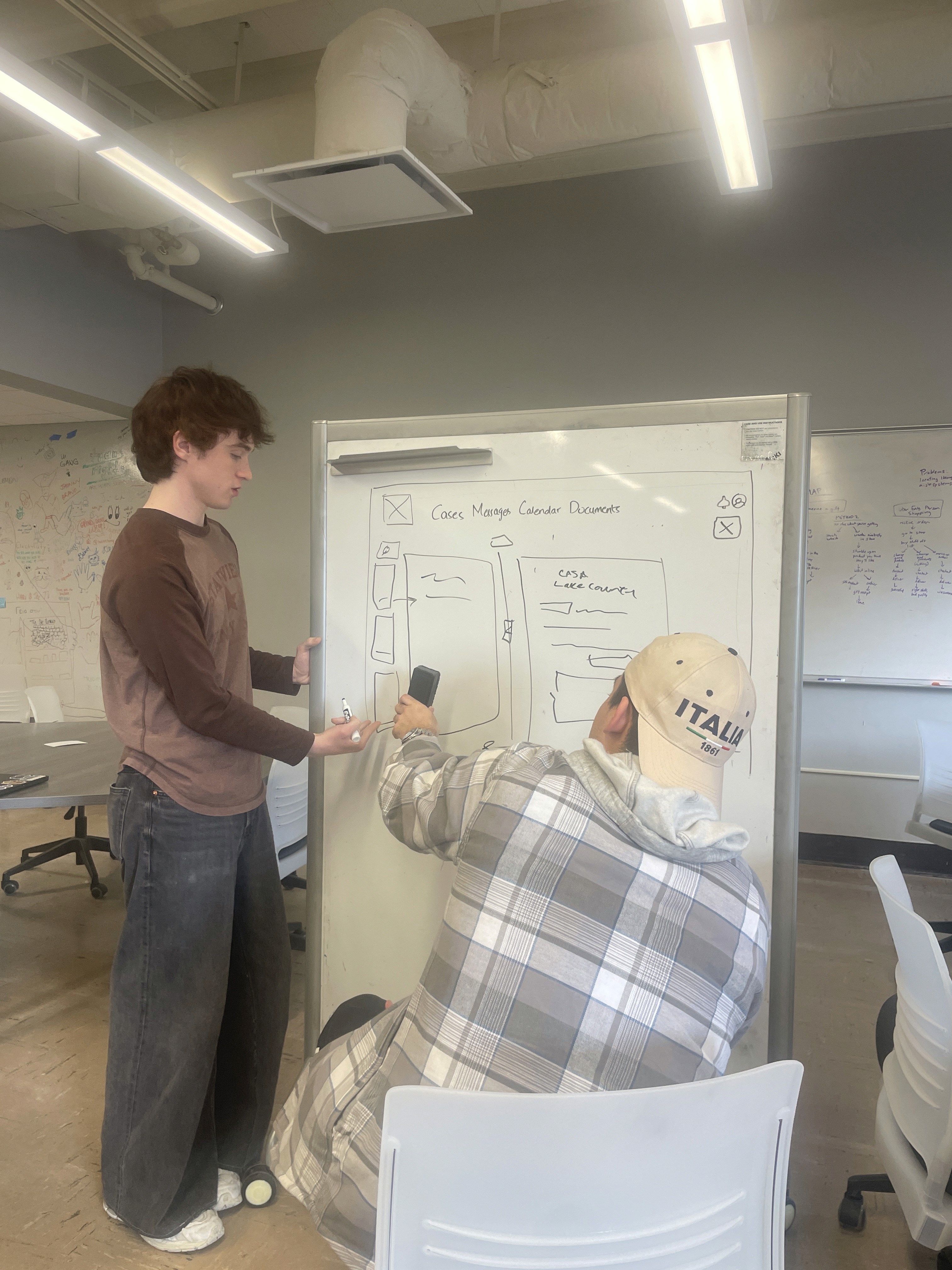
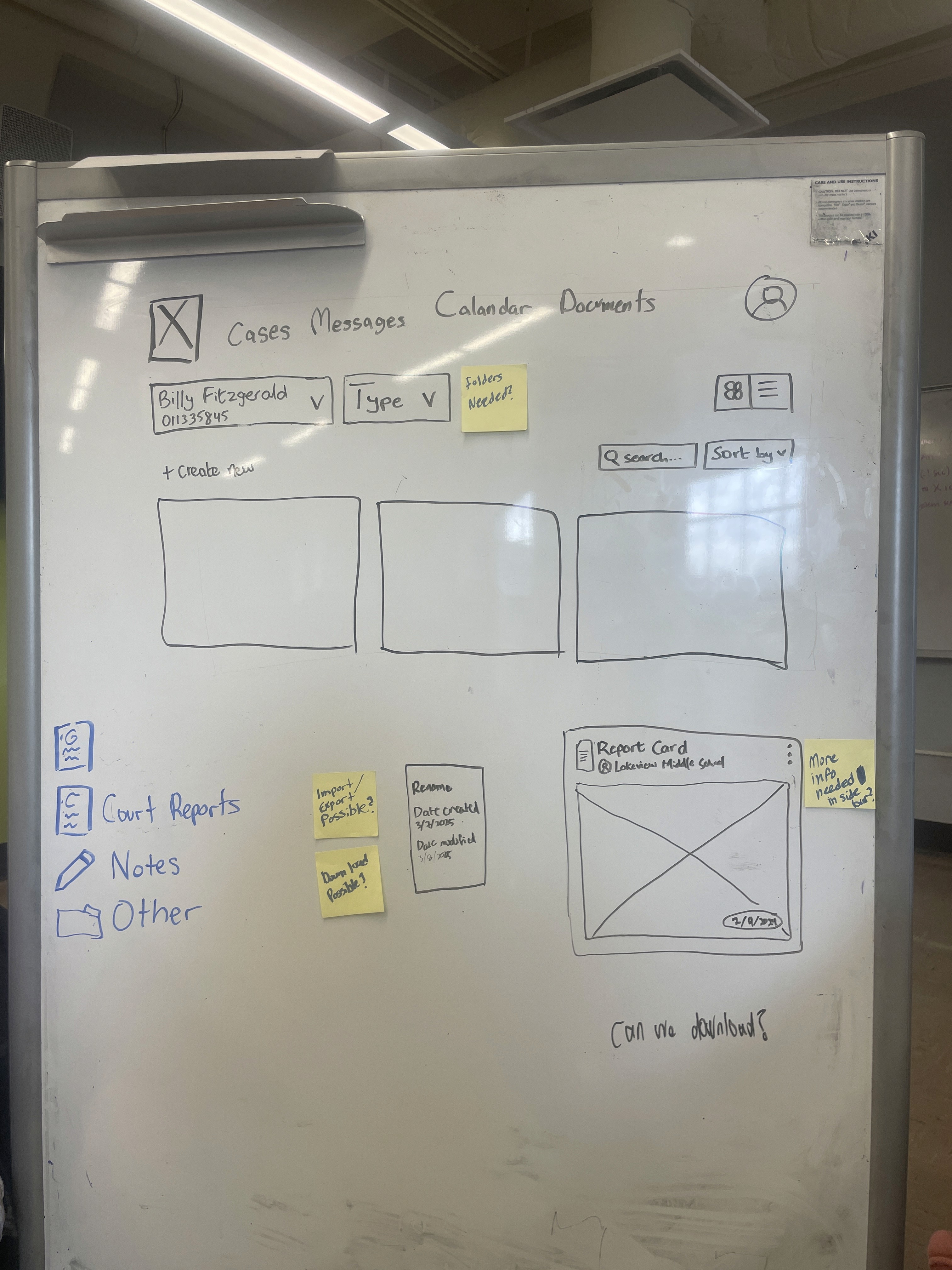
Generated multiple design concepts through individual sketching and collaborative whiteboarding
Explored solutions such as side-by-side document access, adjustable layouts, and alternative autofill behaviors
Iterated on concepts based on sponsor feedback and feasibility considerations
Last, we refined the System
Shifted focus from a single screen to the full report-creation workflow
Simplified how reports are started, written, and submitted
Designed supportive system feedback, including the full loading and autofill experience
This process ensured that design decisions were chosen because of real user needs, while remaining flexible enough to adapt as new insights emerged.

Above are images of the "User Flow" analyses that were developed based on our primary research and interviews.
Conclusion
This project resulted in a clearer, more flexible report-writing experience designed around how CASA volunteers truly operate in the real world. By stepping back from individual screens and focusing on the "broader picture", the final design reduces friction and gives advocates more control in a high-stakes environment.
Outcomes
Simplified the end-to-end report creation flow, making it easier to know where to start and what to do next
Increased flexibility in the report-writing experience through adjustable layouts and reversible autofill
Improved access to supporting materials by keeping case files, comments, and AI assistance within reach
Reduced cognitive load, allowing volunteers to focus on writing thoughtful, high-quality reports
What I Contributed
Led concept development across multiple design directions
Created custom illustrations used throughout the interface
Designed the complete loading and autofill experience
Helped translate research insights into system-level design decisions
Key Takeaways
Designing for high-stakes work requires clarity, restraint, and trust
Giving users control is what matters, especially when automation is involved
Overall, this project reinforced the importance of designing systems that support people under pressure. The result is that advocates can now spend less time managing software, and more time advocating for children who need it most.