DonateEquity: Making Private Equity Donations Accessible for Nonprofits
DonateEquity is a startup helping nonprofits accept private equity gifts (one of the most valuable but most confusing types of donations.) My team and I conducted usability testing and stakeholder interviews with (nonprofits, community foundations, and financial advisors) to uncover barriers, then created some redesigns for the landing pages and role-specific pages to make the process clearer, more trustworthy, and easier to act on.
Challenge
DonateEquity is a startup platform designed to help nonprofits, community foundations, donors, and financial advisors facilitate "private equity donations." Unlike cash or stock donations, private equity gifts are complex, paperwork-heavy, and often times difficult to navigate because they involve legal advisors, financial professionals, and multiple stakeholders.
For nonprofits, these gifts can unlock significant long-term funding. However, the confusion being overall lack of trust, and at times unclear workflows often prevent these organizations from adopting platforms like DonateEquity.
This project focused on understanding "why nonprofits hesitate to use DonateEquity" and how the platform could better support confidence, clarity, and workflow across the many different stakeholders.
Results
Although this project was mainly exploratory and research-driven, validation and synthesis revealed some clear indicators of impact and potential opportunity:
Nonprofit participant expressed increased confidence in understanding equity donations after reviewing revised flows and explanations
Reported that "clearer content" would make them more likely to consider using the platform
Identified that "simplified workflows" were the primary factor in building trust with donors and advisors
Qualitative feedback consistently showed that the clarity and structure of the site was one of the biggest drivers of whether or not the site wanted to be used.
Process
Research & Analysis
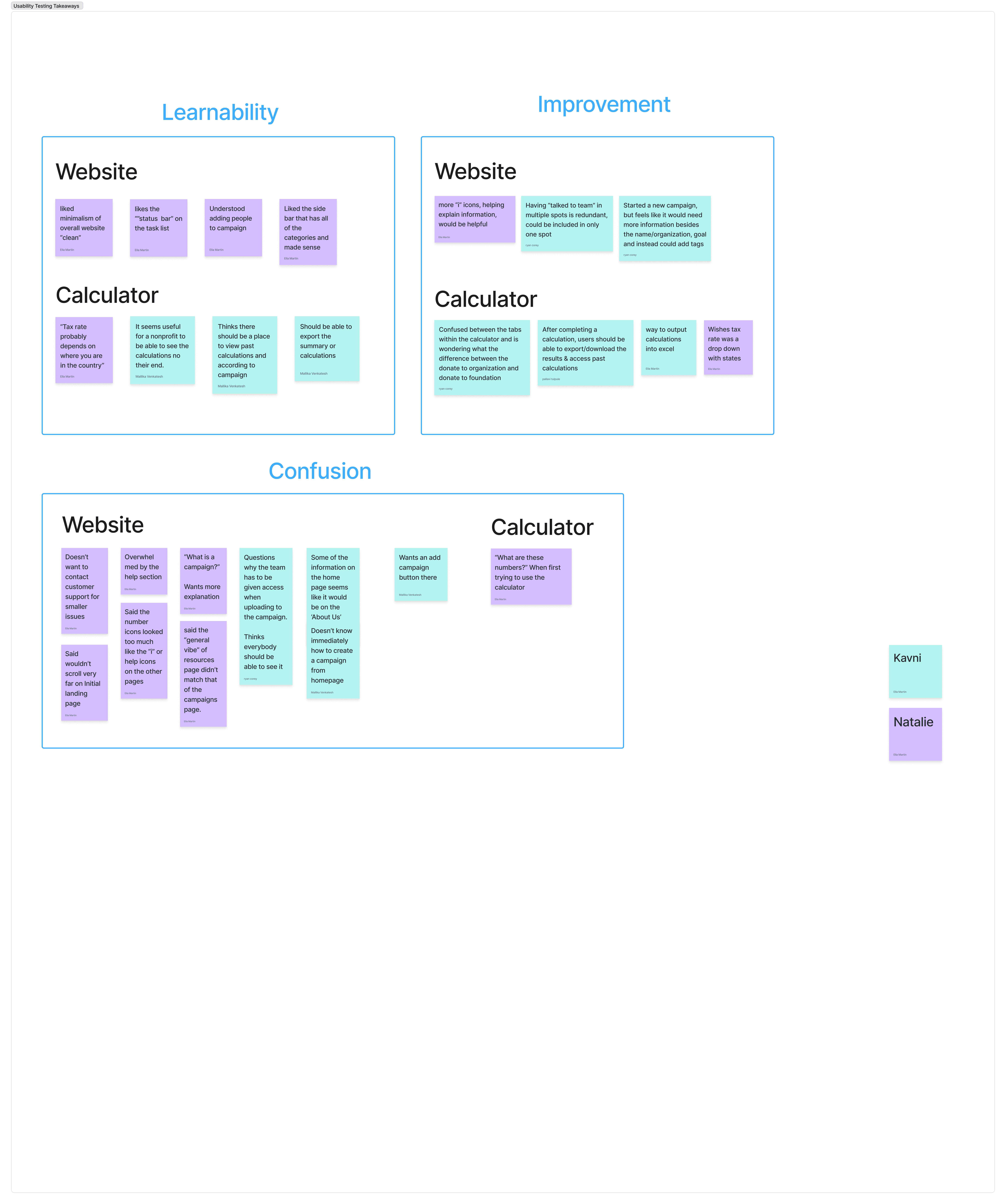
We conducted interviews with community foundation members, nonprofit heads, and financial advisors to understand how equity donations are currently handled and where accidents occur. This was supported by cognitive walkthroughs and usability testing to evaluate how first-time users interpret DonateEquity’s platform.
Information Architecture
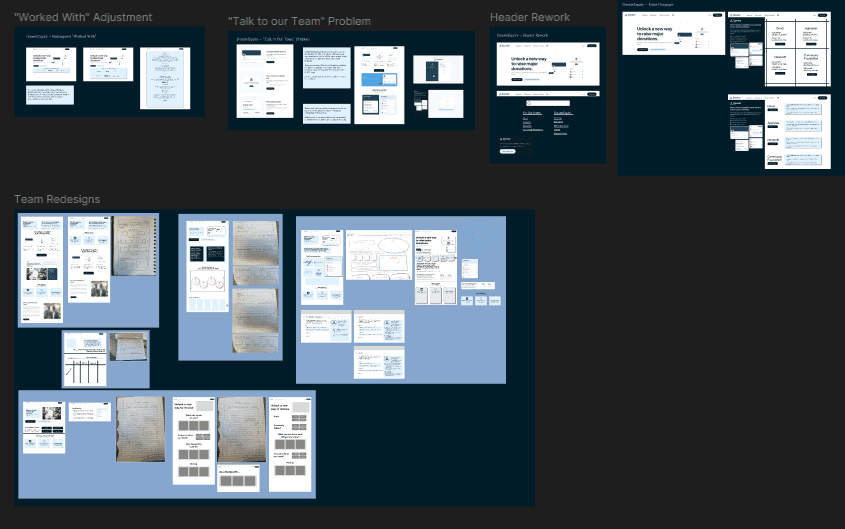
Based on research findings, we restructured how information is presented to better reflect stakeholder mental models. Content was reorganized to clearly communicate who the platform serves, how equity donations work, and what actions users should take next without overwhelming them.
Wireframing & Prototyping
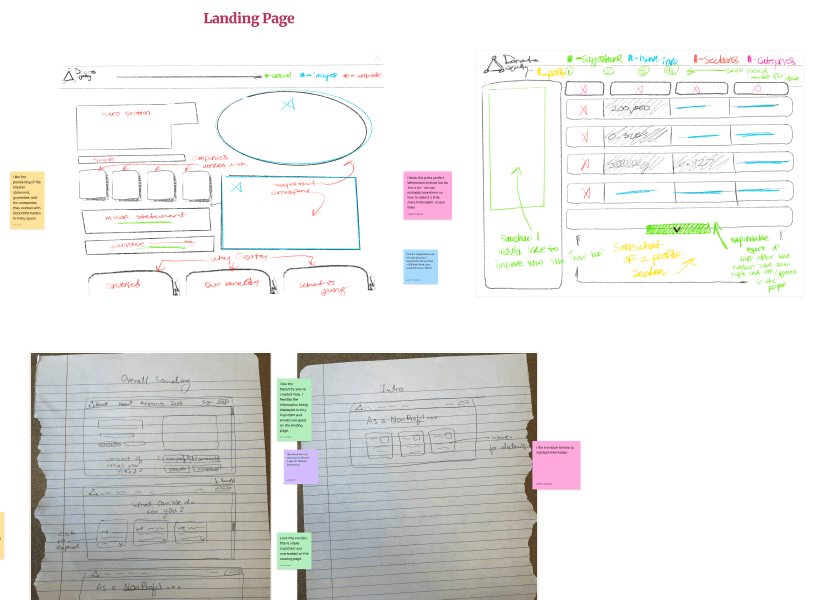
Low- to mid-fidelity wireframes were created to explore clearer landing page hierarchy, role-specific entry points, and simplified explanations of the equity donation process. These concepts focused on reducing cognitive load while reinforcing trust.
Validation & Iteration
Design concepts were reviewed against research insights and sponsor feedback to ensure feasibility and alignment with real-world nonprofit workflows. Iteration focused on simplifying language, reducing friction, and emphasizing transparency throughout the experience.
Visual & System Design
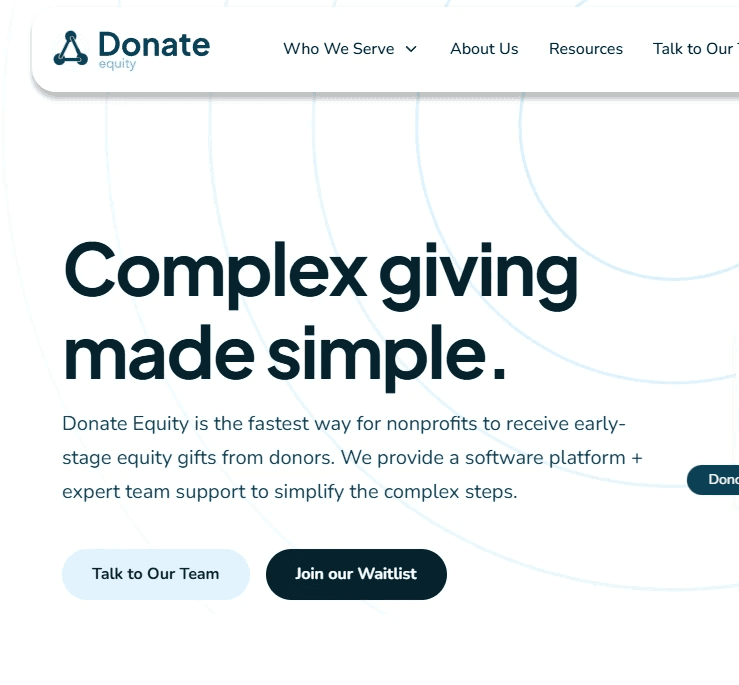
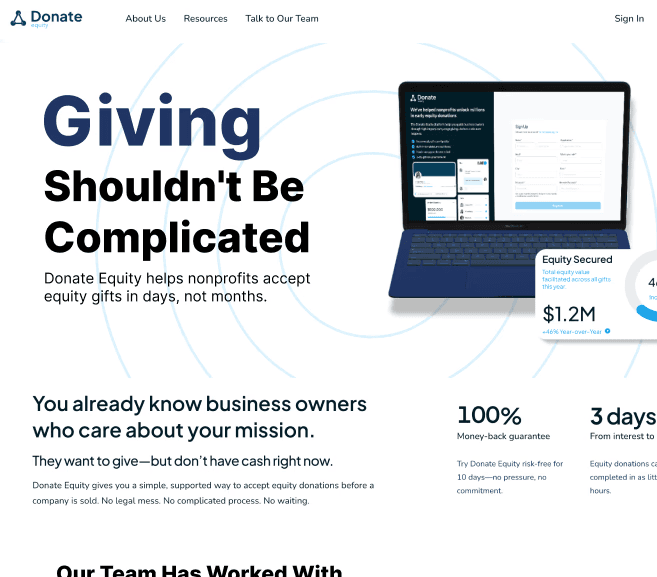
The visual direction prioritized clarity, restraint, and professionalism. Typography, spacing, and layout were used to build trust and legitimacy in a "financial context", while avoiding unnecessary complexity.

Conclusion
This project highlighted just how critical trust, clarity, and workflow are when it comes to designing platforms. Rather than adding features, the most impactful improvements came from simplifying communication, structuring information around the real user roles, and supporting existing processes instead of replacing them.
DonateEquity has the potential to unlock meaningful funding for nonprofits (but only when users feel confident, informed, and supported at every step.) This work focused on creating that foundation, and I truly feel as though their success will be huge if they implement the design recommendations that my team and I have given them.